
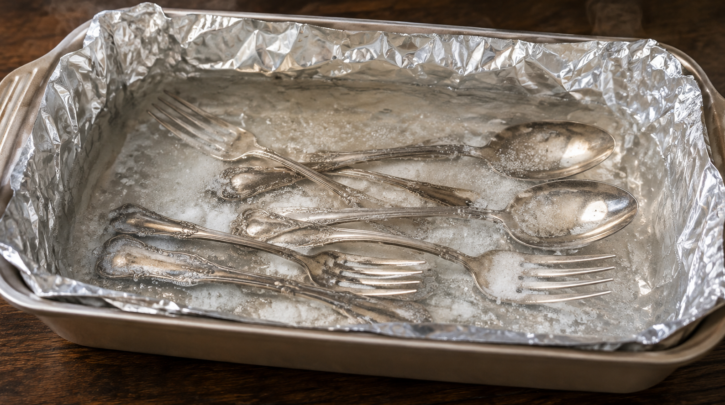

Tarnish on silver flatware isn’t dirt — it’s a genuine chemical reaction between the silver surface and sulfur compounds naturally present in the air, forming a thin layer of silver sulfide that shows up as the familiar yellowish-to-black discoloration. Understanding that actually changes how you should approach cleaning it.
Routine Cleaning
For everyday cleaning without significant tarnish, warm, not hot, water with a mild dish soap and a soft cloth handles the job well — dry pieces immediately and completely afterward, since air-drying silver can leave visible water spots that are their own separate cosmetic issue from tarnish.
Removing Actual Tarnish
A dedicated silver polish, cream or liquid, applied with a soft cloth in gentle circular motions, then rinsed and dried thoroughly, is the standard, reliable method for removing genuine tarnish buildup without damaging the underlying silver.
The Foil-and-Baking-Soda Method: An Honest Look
A popular folk method involves lining a container with aluminum foil, adding baking soda and hot water, and submerging tarnished silver — an electrochemical reaction genuinely does transfer tarnish from the silver onto the aluminum. It works, but it’s worth knowing this method can leave a slightly duller finish than traditional polishing, and it’s specifically not recommended for pieces with intentional dark oxidation left in decorative crevices to highlight relief detail, since the reaction can strip that intentional patina along with the unwanted tarnish.
What to Avoid
Toothpaste, sometimes suggested as a DIY silver cleaner, is often too abrasive for silver and can leave fine scratches with repeated use — a dedicated silver polish formulated specifically for the purpose is a safer choice than reaching for whatever’s already in the bathroom cabinet.
Never Mix Silver and Stainless in the Dishwasher
Placing silver flatware in a dishwasher alongside stainless steel utensils risks a genuine galvanic reaction between the two different metals, which can cause visible pitting on the silver — worth avoiding this specific combination even if you occasionally run silver through a gentler dishwasher cycle on its own; see our silverplate care guide for how this same risk applies to plated pieces as well.
Don’t Over-Polish
While sterling has considerably more material to lose before wear becomes a real concern compared to silverplate’s thin surface layer, polishing only when tarnish genuinely warrants it, rather than on an aggressive routine schedule, still helps preserve fine pattern detail over the very long term.
Hollow-Handle Knives Need Extra Caution
Many flatware knives have hollow handles filled with cement or pitch to hold the separate blade in place, and prolonged soaking or submersion can degrade that internal fill over years, eventually contributing to a loose or rattling handle; see our repair guide for what to do if a handle has already loosened.
A Sustainable Cleaning Routine
Gentle hand washing after use, prompt and complete drying, and occasional polishing only when genuinely needed together keep silver flatware looking good for generations without the wear that overly aggressive or overly frequent cleaning can cause.
Cleaning Newly Acquired Pieces
A piece freshly brought home from an estate sale often just needs a straightforward hand wash and gentle polish to remove years of accumulated tarnish — resist scrubbing hard at anything that doesn’t come off easily, since aggressive first-cleaning scrubbing risks scratching a surface whose condition you don’t yet fully understand.
When Tarnish Won’t Fully Come Off
Extremely heavy, long-neglected tarnish sometimes requires more than one gentle polishing session to fully clear, and it’s worth spacing those sessions out rather than scrubbing aggressively in one sitting — patience across a few sessions produces a better result than forcing the process with excessive pressure or repeated immediate re-polishing.
Why Some Pieces Tarnish Faster Than Others
Pieces that see frequent handling, or that sit near sources of sulfur compounds like certain foods or household products, tend to tarnish noticeably faster than pieces kept in cleaner storage conditions — worth keeping in mind if part of a set seems to need cleaning far more often than the rest, since environment often explains the difference more than anything unusual about the pieces themselves.
Recognizing that pattern helps target cleaning effort where it’s actually needed rather than treating an entire set identically regardless of individual condition.