
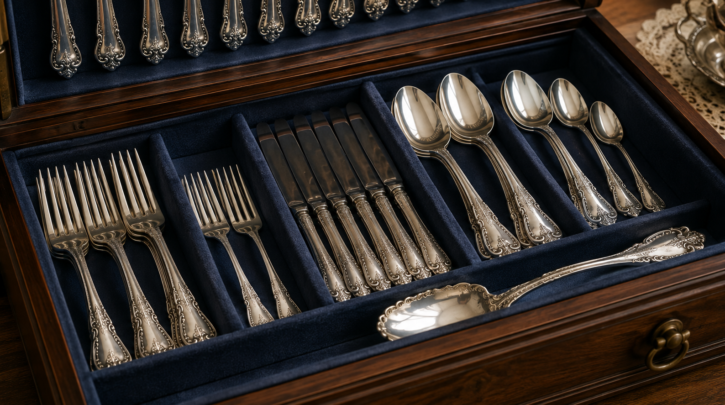

Good storage does more to prevent tarnish than any cleaning routine ever will, since it addresses the problem before it starts rather than after — a handful of genuinely effective, low-effort habits protect silver flatware for the long term.
Anti-Tarnish Cloth and Storage Bags
Cloth specifically treated to absorb the sulfur compounds that cause tarnish, along with dedicated anti-tarnish storage bags and chests, are the single most effective storage tools available — genuinely worth the modest investment for anyone storing silver for extended periods between uses.
Avoid Rubber Entirely
Rubber bands, rubber gloves, and other rubber-containing materials release sulfur compounds that accelerate tarnishing on direct contact — worth keeping silver completely away from rubber during both storage and routine handling, not just avoiding it as a minor afterthought.
Wool Deserves the Same Caution
Wool can also contain or release sulfur compounds capable of accelerating tarnish, which is worth keeping in mind when choosing storage materials or wrapping — purpose-made anti-tarnish cloth remains a safer choice than repurposing wool felt or blankets for silver storage.
Controlling Humidity
Excess humidity speeds up the tarnishing reaction, so storing silver in a relatively dry environment, away from damp basements or humid closets, meaningfully slows tarnish buildup compared to storage in a consistently humid space.
Anti-Tarnish Strips as a Lower-Cost Option
Small commercial anti-tarnish strips or tabs, placed inside a drawer or storage box, offer a lower-cost alternative to fully lining a chest with anti-tarnish cloth, and they’re a reasonable option for anyone not ready to invest in a dedicated silver storage chest.
Regular Use Actually Helps
Genuinely counterintuitive but true: silver used and washed regularly often stays cleaner over time than silver left completely untouched in storage for years, since routine handling and washing keeps tarnish from building up as steadily as it does on a piece that’s simply set aside and forgotten.
What to Avoid Wrapping Silver In
Direct, prolonged contact with certain plastics is worth avoiding for very long-term storage, since some plastic materials can interact with silver’s surface over extended periods — purpose-made anti-tarnish materials remain the safer choice over general-purpose plastic wrap for anything being stored for years rather than weeks.
Confirm What You’re Storing First
Whether a set is sterling or silverplate affects how much long-term wear matters — our free 5-Second Sterling vs. Silverplate ID Checklist confirms which one you have before you invest in storage solutions.
A Simple Long-Term Storage Routine
Clean and completely dry pieces before storing them, use anti-tarnish cloth or bags rather than plain fabric or plastic, keep storage away from rubber and wool, and choose a relatively dry storage location — together, these habits keep silver looking good for years between uses without requiring frequent maintenance polishing.
Storing Sets With Mixed Condition
For a large inherited set where some pieces show more tarnish or wear than others, storing everything together under the same anti-tarnish conditions still helps protect the better-condition pieces from catching up to the more neglected ones, even before you get around to individually cleaning and assessing each piece.
Special Considerations for Display Pieces
Silver kept on display rather than in enclosed storage tarnishes faster, simply from more constant air exposure — if a piece needs to stay visible, more frequent gentle dusting and occasional light polishing becomes part of the realistic maintenance routine rather than something you can avoid through storage alone.
Traveling With Silver
For silver being transported, whether to a new home or simply to a family gathering, wrapping each piece individually in anti-tarnish cloth and packing snugly enough to prevent pieces from knocking against each other protects against both scratching and the physical damage that can happen during transit far more effectively than loose packing.
A little extra care during transport prevents damage that would otherwise require the very repairs this guide’s storage advice is meant to help you avoid.