

Antique flatware develops predictable kinds of wear and damage over decades of use, and knowing what’s actually repairable — and what a repair genuinely involves — helps decide whether restoration is worth pursuing for a specific piece.
Bent Tines and Prongs
Fork tines that have bent out of alignment can often be carefully straightened, ideally by someone experienced with silver specifically, since repeated bending back and forth can weaken or crack the metal — a one-time careful correction is safer than repeated adjustment attempts.
Why Knife Handles Come Loose
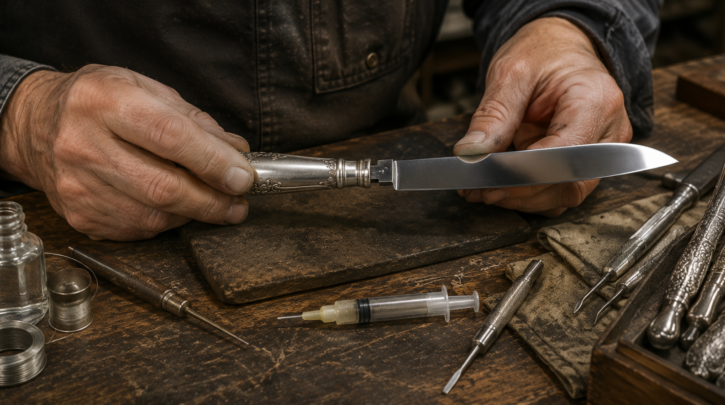
Most flatware knives have separate stainless steel blades cemented into a hollow silver or silverplate handle using pitch or resin, since silver itself doesn’t hold a cutting edge well — over decades, that internal fill can dry out, crack, or degrade, eventually causing the handle to feel loose or rattle, a genuinely common issue on older knives; see our cleaning guide for why prolonged soaking specifically accelerates this kind of internal fill degradation.
Re-Filling a Loose Handle
A professional silversmith can address a loose knife handle by removing the old degraded fill and re-cementing the blade with fresh material — a genuinely worthwhile repair for a handle with real sentimental or collector value, restoring both function and structural integrity.
Cracked or Split Seams
Hollow handles and larger hollowware pieces can develop seam cracks over time, and professional soldering repair is possible for solid sterling — though silverplate repair is trickier, since the heat involved in soldering can damage or discolor the thin plated surface layer in ways that don’t affect solid sterling the same way.
Weighing Repair Cost Against Value
As with monogram removal and silverplate replating, repair cost is worth weighing honestly against a piece’s actual value and how much you’ll use or treasure it afterward — for a genuinely rare or sentimental piece, repair is often clearly worth it, while for a common, modestly valued piece, the repair cost may exceed what the piece is actually worth; see our value guide for how to think through that comparison.
Finding a Qualified Silversmith
Antique silver repair benefits from someone experienced specifically with flatware and historic silver techniques, rather than a general jeweler who may not be familiar with hollow-handle construction or the specific materials period pieces were originally made with — worth asking directly about relevant experience before committing a valuable or sentimental piece to repair.
What’s Usually Not Worth Repairing
Deep structural cracks in solid sterling flatware pieces themselves, as opposed to hollow handle seams, are genuinely rare and, when they do occur, often signal damage extensive enough that repair costs can approach or exceed the value of an equivalent replacement piece — worth getting a repair estimate before assuming any specific damage is automatically worth fixing.
A Realistic Approach to Restoration
Prioritizing repairs on pieces with genuine sentimental or collector value, getting cost estimates before committing, and accepting that some damaged pieces are more sensibly replaced than repaired together make for a realistic, sustainable approach to maintaining an antique flatware collection over the long term.
Documenting Repairs Over Time
Keeping a simple record of what’s been repaired on a piece, when, and by whom creates a useful history worth having both for your own reference and for any future buyer or appraiser, since disclosed, professionally done repairs are generally viewed far more favorably than undisclosed ones discovered later.
Preventing the Need for Repair in the First Place
Gentle handling, avoiding prolonged soaking of hollow-handle knives, and storing pieces where they won’t knock against each other all reduce how often repair becomes necessary in the first place; see our storage guide for the broader set of habits that protect flatware over the long term, well beyond just preventing tarnish.
Getting Multiple Repair Estimates
For anything beyond a minor, inexpensive fix, getting estimates from more than one qualified silversmith before committing helps confirm both a fair price and a consistent understanding of what the repair actually involves, since techniques and pricing can vary meaningfully between different repair professionals.
The extra time spent comparing estimates is a small investment against the cost of a repair done poorly.