
Without the melt-value floor that gives every genuine sterling piece a baseline worth, silverplate value depends almost entirely on pattern popularity, maker reputation, condition, and completeness — and being honest about that difference matters for setting realistic expectations.
No Meaningful Melt Value
Because the silver content in plate is limited to a thin surface layer, there’s essentially no meaningful scrap or melt value the way there is with solid sterling; see our sterling melt value guide for how that calculation works for sterling specifically, and why the same math simply doesn’t apply to plate.
Pattern and Maker Still Drive Real Demand
Popular patterns from well-regarded makers — particularly elaborate Victorian-era designs and pieces from historically significant names like 1847 Rogers Bros. — can command genuine collector interest independent of any metal value at all, driven purely by design appeal, historical significance, and completeness for someone building or restoring a set.
Condition Matters Even More Than for Sterling
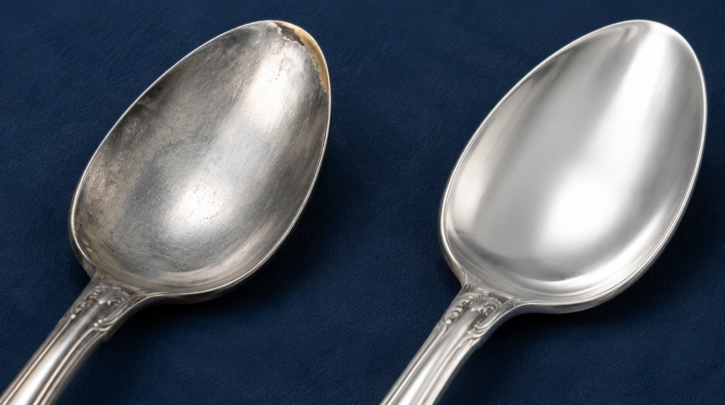
Because plate’s thin silver layer can wear through to base metal, condition assessment for silverplate needs to weigh wear-through risk specifically, not just general scratches or tarnish — a piece with visible base metal showing through at high-wear points is worth considerably less than an equivalent piece with intact plating throughout.
Being Honest About the Broader Market
Silverplate generally trades at meaningfully lower average prices than sterling, and that gap has arguably widened in recent decades as fewer younger buyers want formal silverware sets of any kind for everyday use — a genuine market trend worth acknowledging honestly rather than assuming demand has stayed constant across generations.
Replating as a Restoration Option
Unlike sterling, which has no thin surface layer to restore, worn silverplate can be re-plated — sending a piece to have a fresh silver layer electroplated back onto the surface — though this service typically costs more than it would add to a common pattern’s resale value, making it more sensible for cherished heirloom pieces you plan to keep than for pieces headed toward resale; see our care guide for more on when replating genuinely makes sense.
Rare Forms Still Command Premiums
Unusual serving pieces, elaborate figural forms, and pieces from shorter production runs can command real premiums within silverplate’s own market, following the same rarity logic that applies across every collectible category on this site, even without sterling’s melt-value baseline underneath it.
Checking Current Prices
As with every category on this site, checking recent completed sales for a specific pattern and piece type gives a far more accurate current picture than assuming any general rule of thumb applies uniformly.
Value Beyond the Market
A silverplate set with genuine family history often carries sentimental value well beyond whatever it would fetch on the open market — a completely legitimate reason to keep and care for a set regardless of what current collector demand happens to look like.
A Grounded Way to Assess a Set
For anyone assessing a silverplate collection for the first time, start by confirming plate status through the mark, identifying the pattern, and noting wear-through or condition issues, then check recent completed sales for comparable pieces before assuming either that everything is essentially worthless or that a full set commands a major premium — the honest reality for most silverplate collections sits closer to modest but genuine value.
Selling Whole Sets vs. Individual Pieces
Because silverplate generally lacks sterling’s melt-value floor, a complete or near-complete set is often more attractive to buyers, and therefore easier to sell, than the same pieces offered individually — worth considering when deciding how to approach selling a larger collection.
Setting Realistic Expectations Before Selling
Going into a sale with an accurate sense of silverplate’s genuine market position — solidly collectible for the right pattern and condition, but without sterling’s melt-value backstop — prevents the disappointment of expecting sterling-level returns from a set that was never going to command them.
That grounded framing leads to a smoother, more satisfying sale than chasing an unrealistic number.