
Sterling silver and silverplate can look nearly identical at a glance, but the value difference between them is enormous — and reliably telling them apart starts with understanding what each actually is, not just what they look like.
What Sterling Actually Is
Sterling silver is a solid alloy, 92.5% pure silver throughout the entire piece, which means it carries genuine intrinsic value tied directly to the current price of silver as a commodity — melt an old sterling spoon down, and you get real, valuable silver.
What Silverplate Actually Is
Silverplate is a base metal — often nickel silver (also called German silver, itself containing no actual silver despite the name), copper, or a similar alloy — with a thin layer of pure silver electroplated onto the surface. That plating layer is generally far too thin to carry any meaningful melt value, which is the core reason silverplate trades for so much less than sterling despite sometimes looking indistinguishable when new.
The Mark Is the Most Reliable Test
“STERLING” or “925” stamped on a piece reliably confirms genuine sterling silver, while silverplate typically carries different markings entirely — “EPNS” (electroplated nickel silver), “A1,” “Quadruple Plate,” or simply a maker’s name with no purity claim at all, since there was never a standardized numeric fineness mark for silverplate the way there is for sterling; see our silverplate marks guide for the full range of plate-specific markings.
The Magnet Test — With an Important Caveat
Neither sterling silver nor most silverplate base metals are strongly magnetic, so a magnet test can help rule out certain non-precious substitutes — but remember that even a genuine all-sterling set typically has stainless steel knife blades, which are magnetic, so testing a knife blade specifically will give a misleading result regardless of whether the handle itself is sterling.
Weight Isn’t Fully Reliable
Sterling and silverplate can end up similar in overall weight depending on the specific base metal used beneath the plating, which means weight alone isn’t a fully trustworthy test on its own — useful as one data point alongside the mark, but not a substitute for actually reading it.
Wear-Through: A Tell Unique to Silverplate
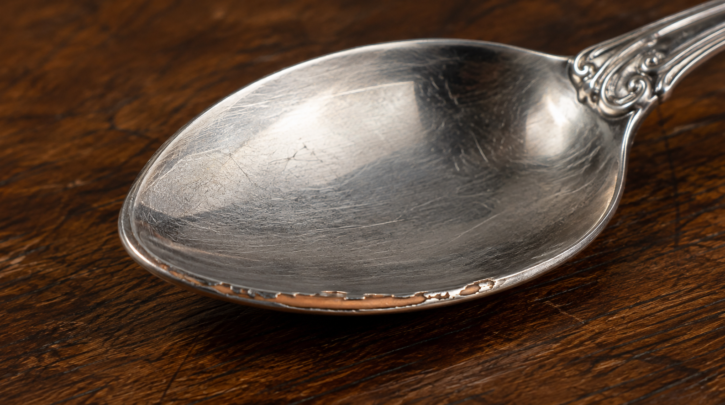
Decades of heavy use and repeated polishing can eventually wear silverplate’s thin surface layer down to the base metal underneath, revealing a different color or texture at high-wear points like the edges of spoon bowls or fork tines — a distinctive sign that only ever happens to plated pieces, since solid sterling has no thin surface layer to wear through in the first place.
Why This Distinction Matters So Much
Because sterling carries genuine commodity-tied value and silverplate generally doesn’t, confusing the two — in either direction — leads directly to either underselling a genuinely valuable set or overpaying for one that isn’t; see our silverplate value guide for what actually does drive value in plated pieces, since pattern and condition still matter even without melt value in play.
Practice the Core Checks
Our free 5-Second Sterling vs. Silverplate ID Checklist walks through these exact detection principles in a format built to actually use while you’re holding a piece.
When the Mark Is Worn or Missing
For a piece with a worn, illegible, or entirely absent mark, combining the wear-through check, overall weight impression, and comparison against known patterns from confirmed sterling or silverplate makers gives the most reliable read available — though a genuinely uncertain piece may be worth a professional opinion before making any decision based on assumed silver content.
A Quick Comparison
| Feature | Sterling | Silverplate |
|---|---|---|
| Composition | 92.5% silver throughout | Base metal with thin silver layer |
| Typical marks | STERLING, 925 | EPNS, A1, Quadruple Plate |
| Melt value | Real, tied to silver price | Minimal to none |
| Wear pattern | No wear-through possible | Can wear to base metal |
Why Both Categories Are Worth Understanding
Even setting aside sterling’s melt value advantage, silverplate has its own genuine collector following built around pattern and maker, much like sterling — understanding both categories well means never misjudging a piece’s actual worth in either direction, whether that means underselling a sterling find or overpaying for silverplate mistaken for solid silver.
A Practical Checklist Recap
- Read the mark first: STERLING/925 versus EPNS/plate terminology
- Skip the magnet test on knife blades specifically
- Check high-wear points for any sign of base metal showing through
- Compare overall weight and feel against a known example if still uncertain