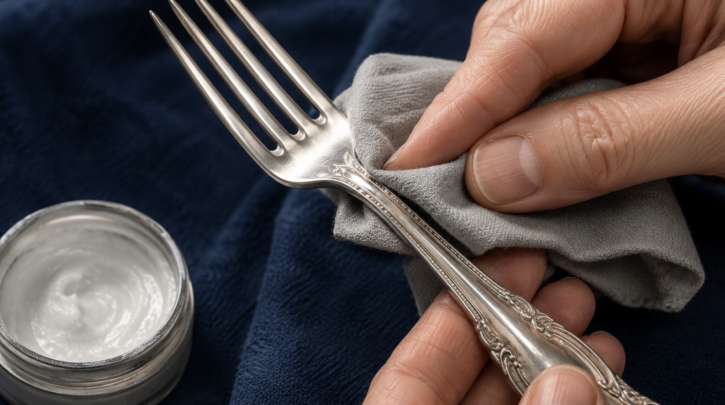

Caring for silverplate shares much in common with caring for sterling, but it carries one genuinely unique consideration that sterling doesn’t: the thin silver surface layer can actually wear away with repeated aggressive polishing, which means gentler, less frequent care often preserves a piece better than frequent vigorous buffing.
Why Polishing Silverplate Requires Extra Care
Every time an abrasive polish or cloth removes tarnish from silverplate, it also removes a microscopically thin layer of the actual silver plating underneath — repeated over years or decades, this genuinely thins the plating and can eventually contribute to wear-through, something that simply isn’t a concern with solid sterling, which has no thin surface layer to wear away in the first place.
Choosing a Gentler Polish
A silver polish specifically formulated as gentle or designed for plated silver, rather than a more abrasive general-purpose polish, reduces how much plating gets removed with each cleaning, and using it only when genuinely needed rather than on a routine schedule helps preserve the plating over the long term.
Hand Washing Basics
Warm, not hot, water with a mild dish soap and a soft cloth handles routine cleaning for silverplate just as it does for sterling and most other collectible metals — this simple approach avoids unnecessary wear and works for day-to-day maintenance between more thorough polishing sessions.
Avoiding the Dishwasher
Dishwasher heat, harsh detergent, and water pressure can damage silverplate, and placing silver flatware next to stainless steel utensils in a dishwasher risks a genuine galvanic reaction between the two different metals that can cause pitting on the silver — worth avoiding this combination specifically, not just avoiding the dishwasher generally.
Tarnish Still Happens on Plate
Because the surface layer is genuine silver, silverplate tarnishes the same way sterling does, and the same anti-tarnish storage principles apply — anti-tarnish cloth or storage bags, and avoiding rubber bands or other rubber-containing materials near silver, since rubber releases sulfur compounds that accelerate tarnishing on contact; see our storage guide for the full set of storage practices that protect both sterling and plate alike.
Checking for Wear-Through Regularly
Periodically checking high-contact points — the edges of spoon bowls, fork tines, knife handle seams — for any sign of base metal showing through catches wear-through early, while the visual change is still minor rather than extensive.
When Replating Makes Sense
For a piece with genuine sentimental value showing real wear-through, replating restores both appearance and usability, though it’s worth weighing the service cost against how much you’ll actually use or display the piece afterward; see our value guide for why replating often doesn’t make financial sense purely from a resale perspective, even when it’s clearly worthwhile for a piece you plan to keep.
A Sustainable Long-Term Routine
Gentle hand washing after use, occasional gentle polishing only when tarnish genuinely warrants it, and proper anti-tarnish storage between uses together form a routine that keeps silverplate looking good for generations without accelerating the wear that aggressive, frequent polishing would cause.
Cleaning Newly Acquired Pieces
A piece freshly brought home from an estate sale often just needs a straightforward hand wash and a light polish to remove years of dust and tarnish — resist scrubbing hard at anything that doesn’t come off easily, since aggressive first-cleaning scrubbing is exactly the kind of heavy-handed treatment most likely to accelerate wear-through on a piece whose condition you don’t yet fully understand.
Storage Materials Worth Avoiding
Beyond rubber, certain other materials and some types of wool can also contribute to tarnish or surface damage over long-term storage — purpose-made anti-tarnish cloth, felt, or specifically designed silver storage bags remain the safest choice for extended storage between uses.
Passing Down a Well-Cared-For Set
A silverplate set maintained with this gentler, more patient approach can genuinely last for generations, which is worth keeping in mind as motivation for choosing the slower, more careful routine over quick, aggressive polishing that delivers a shinier result today at the cost of the plating’s long-term lifespan.
Consistent, gentle care beats occasional aggressive treatment every time, for silverplate more than almost any other collectible category on this site.