
Silverplate flatware brought the look of silver tableware to households that couldn’t afford solid sterling, and it’s every bit as collectible as sterling in its own right, even without the same melt-value floor — identification starts the same way, with the mark, then the pattern.
How Electroplating Made Silver Affordable
The electroplating process, commercialized starting in the 1840s following Elkington’s patented process in England, allowed manufacturers to apply a thin layer of genuine silver over an affordable base metal, making silver-look tableware accessible to middle-class households in a way solid sterling never could be — a genuine democratization of a luxury good, similar in spirit to how colored pressed glass brought decorative glassware to the same market decades later.
What’s Underneath the Silver
Most silverplate uses nickel silver, also called German silver, as its base metal — an alloy of copper, nickel, and zinc that despite the name contains no actual silver at all, with the genuine silver limited entirely to the thin electroplated surface layer; see our sterling vs. silverplate guide for how this composition compares directly to solid sterling.
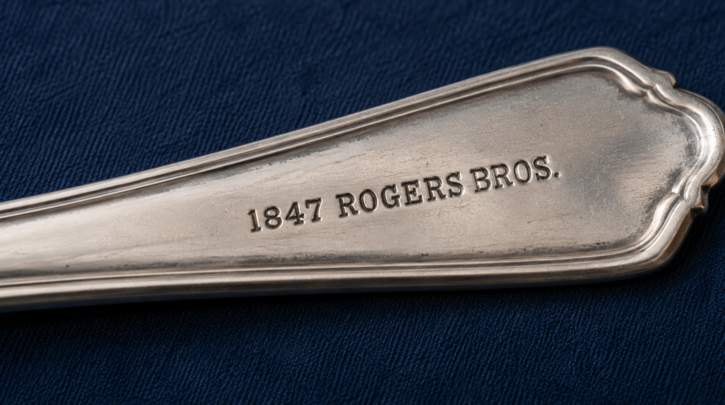
1847 Rogers Bros.: The Iconic Name
1847 Rogers Bros. is probably the single most recognized American silverplate brand name, historically significant enough that numerous other, unrelated companies incorporated some form of “Rogers” into their own branding to capitalize on that recognition; see our silverplate marks guide for how to tell genuine Rogers Bros. production apart from the many other “Rogers”-branded companies that followed.
Other Major Silverplate Makers
Oneida built much of its historic reputation specifically around silverplate, while International Silver, Wallace, and Reed & Barton — all major sterling producers covered elsewhere on this site — also ran substantial silverplate product lines alongside their solid silver offerings.
Start With the Mark
Silverplate marks look meaningfully different from sterling marks — “EPNS,” “A1,” “Quadruple Plate,” or simply a maker’s name with no purity claim at all, since there was never a mandatory numeric fineness standard for plate the way “925” works for sterling; see our silverplate marks guide for the full range of markings you’ll actually encounter.
Pattern Identification Works the Same Way
Just like sterling, silverplate patterns are almost never named directly on the piece, which means visual matching against a maker’s known catalog remains the standard identification method; see our pattern identification guide for the general visual-matching process, which applies equally well to plate as it does to sterling.
Confirm Sterling vs. Silverplate First
Before going further, our free 5-Second Sterling vs. Silverplate ID Checklist confirms which one you’re actually holding in about five seconds.
Checking for Wear-Through
Because the silver layer on plate is genuinely thin, decades of use and polishing can wear it down to reveal the base metal underneath at high-contact points — a distinctive tell unique to plated pieces that’s worth checking for as part of basic identification, since it confirms plate status even when a mark is worn or missing.
Silverplate Deserves Its Own Collector Respect
It’s worth pushing back gently on the assumption that silverplate is simply “lesser” sterling — genuinely elaborate Victorian-era plate pieces, rare forms, and well-regarded patterns from major makers command real collector interest independent of any melt-value comparison; see our silverplate value guide for what actually drives price in this category.
Where Silverplate Turns Up Today
Estate sales, inherited kitchen chests, and antique malls remain the most common sources, and because silverplate was genuinely everyday and gift-occasion tableware in millions of households, it shows up in general circulation at least as often as sterling does; see our buying guide for what to expect across different sourcing options.
A Practical Starting Approach
For an inherited or found set of unknown composition, checking the mark on a representative piece first tells you immediately whether you’re dealing with sterling or plate, which then determines which of this site’s identification and value frameworks actually applies to the rest of the set.
A Great Entry Point for New Collectors
Because silverplate generally costs far less than comparable sterling, it’s a genuinely accessible way to start learning flatware identification and pattern recognition without the financial stakes attached to a sterling purchase — skills that transfer directly if you later move into collecting sterling as well.
Many experienced sterling collectors started out exactly this way, cutting their teeth on silverplate before moving on to higher-stakes purchases.