
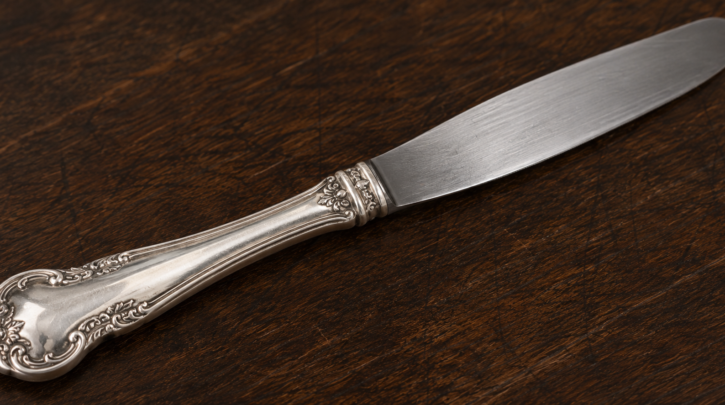

Sterling silver flatware identification comes down to two questions asked in order: is this actually sterling at all, and if so, what pattern is it — and getting the first question right matters more than almost anything else, since it’s the difference between silver with genuine intrinsic value and silver-colored metal with none.
What Makes Silver ‘Sterling’
Sterling silver is an alloy of 92.5% pure silver and 7.5% other metal, almost always copper, added because pure silver is too soft to hold up to daily use as flatware. American silversmiths widely adopted this standard after Tiffany & Co. began marking its silver sterling in 1868, which became the industry benchmark that most American manufacturers followed from that point forward.
Before Sterling: Coin Silver
Older American silver, particularly pieces made before the sterling standard became widespread, was often “coin silver,” typically around 90% pure and sometimes marked “COIN” or “PURE COIN” rather than “STERLING.” Genuine coin silver pieces are generally older than sterling-marked pieces and represent a real, distinct category worth recognizing rather than assuming every unmarked or unusually marked antique piece is sterling.
Start With the Mark
The word “STERLING,” the number “925,” or both together on the back of a piece is the single most reliable confirmation of genuine sterling silver; see our marks and hallmarks guide for how these marks work alongside maker’s marks, and how they differ from the markings used on silverplate.
Then Identify the Pattern
Because pattern names are rarely stamped on the piece itself, identifying which of the hundreds of historic sterling patterns you’re holding is almost always a visual matching exercise based on the design pressed into the handle; see our sterling flatware patterns guide for the most iconic and widely produced patterns worth learning to recognize first.
Why Sterling vs. Silverplate Is the Critical Distinction
Sterling carries genuine value tied directly to the silver commodity market, while silverplate — a thin layer of silver electroplated over a base metal — generally doesn’t, regardless of how similar the two can look at a glance; see our sterling vs. silverplate guide for the marks and physical checks that reliably tell them apart.
Sterling Knife Blades Are Usually Stainless
A genuinely common point of confusion: even in an otherwise all-sterling set, knife blades are typically stainless steel rather than silver, since silver doesn’t hold a cutting edge well — only the knife handle is sterling. Testing a knife blade with a magnet and finding it magnetic doesn’t mean the set isn’t sterling; it just means you tested the one piece expected to behave differently from the rest.
Keep a Quick Reference Handy
Our free 5-Second Sterling vs. Silverplate ID Checklist distills the fastest, most reliable checks into one printable page you can keep in a kitchen drawer or bring to an estate sale.
Watching for Fakes and Alterations
Because sterling carries real melt value, some pieces get misrepresented — a fake “STERLING” stamp added to a silverplate piece is a genuine scam worth knowing how to spot before paying sterling prices for something that isn’t; see our fakes and alterations guide for the specific warning signs.
Building Real Identification Skill
As with every collectible category, handling verified genuine sterling pieces regularly — at shows, through a collector community, or via a trusted dealer — builds a tactile and visual feel for marks and patterns that’s hard to fully replicate from photos or descriptions alone.
Where Sterling Flatware Turns Up
Estate sales, inherited kitchen chests, and antique malls remain the most common sources for sterling flatware, and because it was genuinely used as everyday and special-occasion tableware in millions of households, it shows up in general circulation more often than many other collectible categories; see our buying guide for what to expect across different sourcing options.
A Reasonable Starting Approach
For anyone assessing an inherited or found set for the first time, checking the mark on every piece first — since a set can sometimes mix sterling and silverplate pieces without obvious visual differences — before moving on to pattern identification gives the most reliable starting picture of what you actually have.
Getting this first check right before moving on to pattern matching saves considerable time and avoids sorting confusion later.