

 Written by: Flatware Pattern Editorial Team
Posted on: October 14, 2026
Gorham Etruscan vs Fairfax: How to Tell These Two Patterns Apart
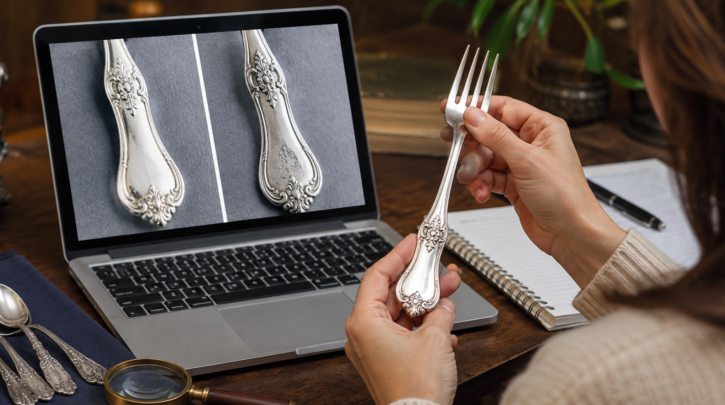
Gorham’s Etruscan and Fairfax patterns are easy to confuse. Both are sterling, both come from the early 1910s, and both have clean, geometric handles with no flowers or scrolls. A reader recently sent us photos of a family set she believed was Fairfax. One small…
 Written by: Flatware Pattern Editorial Team
Posted on: July 10, 2026
How to Identify Your Flatware Pattern: A Complete Guide
Identifying a flatware pattern is a genuinely different challenge than identifying most other collectibles — with thousands of distinct patterns produced across dozens of manufacturers over more than 150 years, and pattern names almost never stamped on the piece itself, matching what you’re holding to…
 Written by: Flatware Pattern Editorial Team
Posted on: July 10, 2026
Active vs. Retired Flatware Patterns: Why It Matters
Whether a flatware pattern is still “active” — currently in production — or “retired” — discontinued entirely — shapes everything about how realistic it is to add to or complete an existing set, and it’s worth checking early rather than assuming either way. What ‘Active’…
Written by: Flatware Pattern Editorial Team
Posted on: July 10, 2026
Flatware Pattern Numbers and Codes: A Guide
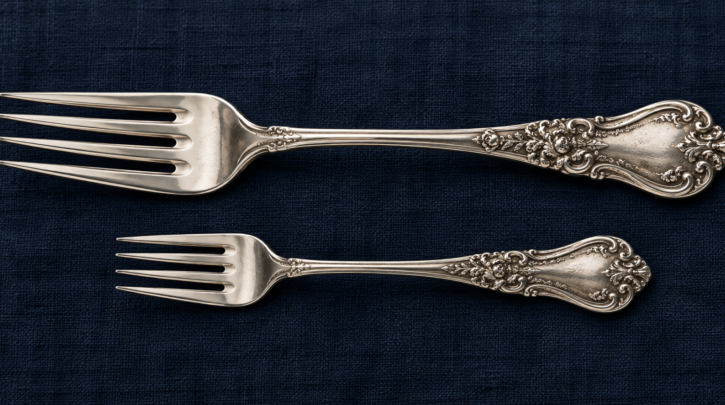
Beyond the pattern name itself, many manufacturers tracked their flatware designs internally using numbers or codes — a system that mostly lives in company catalogs and modern reference databases rather than being stamped directly on individual pieces. Why These Systems Exist With companies producing dozens…
 Written by: Flatware Pattern Editorial Team
Posted on: July 10, 2026
Matching Flatware Patterns to Complete a Set
Once a pattern is identified, actually finding additional matching pieces to complete or expand a service is its own practical challenge — one that a handful of specialized resources handle far better than general searching. Understanding Place Settings and Service Counts A basic place setting…