
International Silver Company has a genuinely different origin story than most other makers on this site — rather than growing from a single founder’s workshop, it formed around 1898 through the merger of numerous smaller Connecticut-area silver manufacturers into one large combined company.
Born From a Major Industry Consolidation
Centered around Meriden, Connecticut, International Silver brought together Meriden Britannia and several other regional silver manufacturers under one corporate roof, quickly growing into one of the largest silverware companies in the world — a genuine, well-documented example of the broader consolidation trend that reshaped the American silverware industry over the following decades; see our active vs. retired patterns guide for how this same consolidation pattern played out across other makers too.
Why the Brand Portfolio Is So Complex
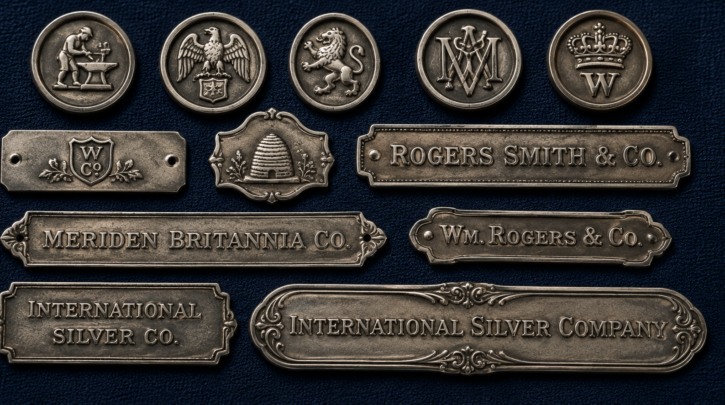
Because International Silver formed by combining several already-established companies, many of the original constituent brand names continued being used on products for years after the merger rather than everything immediately consolidating under a single “International Silver” mark — a genuine identification complexity that sets this company apart from makers with a single, consistent brand identity from founding onward.
Both Sterling and Extensive Silverplate
International Silver produced genuine sterling flatware alongside an especially large and varied silverplate output, reflecting the company’s roots in several different predecessor firms with their own distinct product lines and market positioning; see our silverplate marks guide for the range of markings this kind of varied brand history can produce.
Prelude and Royal Danish
Among International Silver’s own sterling patterns, Prelude and Royal Danish are two of the most widely recognized, each reflecting different design sensibilities within the company’s broad overall output.
Identifying a Specific International Silver Piece
Given the brand complexity, confirming exactly which constituent company or era a specific International Silver piece traces back to sometimes takes more careful mark research than identifying a piece from a single-lineage maker — worth treating as a genuinely more involved identification puzzle rather than expecting the same straightforward mark-to-maker mapping that applies elsewhere.
A Useful Case Study in Industry History
International Silver’s formation is worth understanding not just for identifying its own products but as a genuinely useful example of how the broader American silverware industry consolidated over time — a pattern that shows up, in smaller or larger forms, across most of the major makers covered on this site.
Finding International Silver Pieces
Given the company’s enormous historic output across multiple brand lines, International Silver pieces are genuinely common on the secondary market, making patterns from this maker a generally accessible option for collectors regardless of which specific constituent brand a piece traces back to.
A Practical Note on Researching Constituent Brands
For a piece carrying an unfamiliar brand name that turns out to trace back to International Silver’s history, dedicated silver reference guides and collector communities are worth consulting specifically, since a general search for “International Silver” alone may miss the specific predecessor company a given piece actually originates from.
Value Considerations Specific to International Silver
Because International Silver’s output spans such a wide range, from mass-market silverplate to genuinely well-regarded sterling patterns, value varies enormously within the company’s own catalog — worth avoiding any assumption that “International Silver” as a name implies a single consistent value tier the way a more focused single-lineage maker might; see our value guide for the general framework that applies once a specific pattern and composition are confirmed.
A Maker Worth Understanding for the History Alone
Even setting aside the practical identification challenges, International Silver’s formation offers a genuinely interesting window into how the American silverware industry actually operated — competitive regional manufacturers consolidating into ever-larger combined entities, a pattern echoed across much of American manufacturing history in this same general period.
A Maker Worth Patience For
Given the genuine research complexity involved, identifying an International Silver piece with full confidence sometimes takes more back-and-forth with a reference tool or research service than a single-lineage maker would require — worth budgeting a bit more patience for this specific maker rather than expecting the same quick turnaround as a more straightforward identification.
The payoff for that patience is a genuinely thorough understanding of one of the most historically important companies in the American silverware industry.